Thermal envelope
Refrigerated facility envelope is lighter than frozen storage but still requires disciplined vapor control. Wall and ceiling thickness is typically 4 inches to 5 inches, with R-32 to R-40 target. Hot climates such as Houston, Phoenix, and Florida may justify higher-performance assemblies.
Vapor barrier continuity is maintained on the warm side of insulation, sealed at every panel joint, every penetration, and every structural transition. Refrigeration piping, fire-suppression penetrations, and electrical penetrations receive high-density foam fill, vapor membrane wrap, and flashed exterior collars.
Slab and foundation
Refrigerated warehouse slabs are conventional slab-on-grade at 34°F+ operating temperatures. The decisions that matter are ACI 117 concrete tolerance, sub-slab vapor barrier, local soil conditions, and drainage where process areas require slope-to-drain. FF35/FL25 is acceptable for manual fork trucks; FF60+/FL50+ may be required for AS/RS.
Refrigeration system selection
| Facility Size | Common Refrigeration Approach |
|---|
| Under 30,000 SF | DX, packaged condensing units |
| 30,000-80,000 SF | DX or ammonia direct expansion, single-stage |
| 80,000-150,000 SF | Ammonia with glycol secondary loop or CO2 transcritical |
| 150,000-300,000 SF | Ammonia, single-stage or two-stage |
| 300,000+ SF | Ammonia central plant with distributed evaporators |
Ammonia is most efficient at industrial scale. CO2 is increasingly common in HFC phase-down jurisdictions. Glycol secondary loops keep ammonia in the machine room. DX is standard for smaller refrigerated warehouses.
Dock design
| Operation | Typical Dock Density |
|---|
| Typical distribution | 1 dock per 8,000-12,000 SF |
| High-cycle cross-dock | 1 dock per 4,000-6,000 SF |
| Low-turn refrigerated storage | 1 dock per 12,000+ SF |
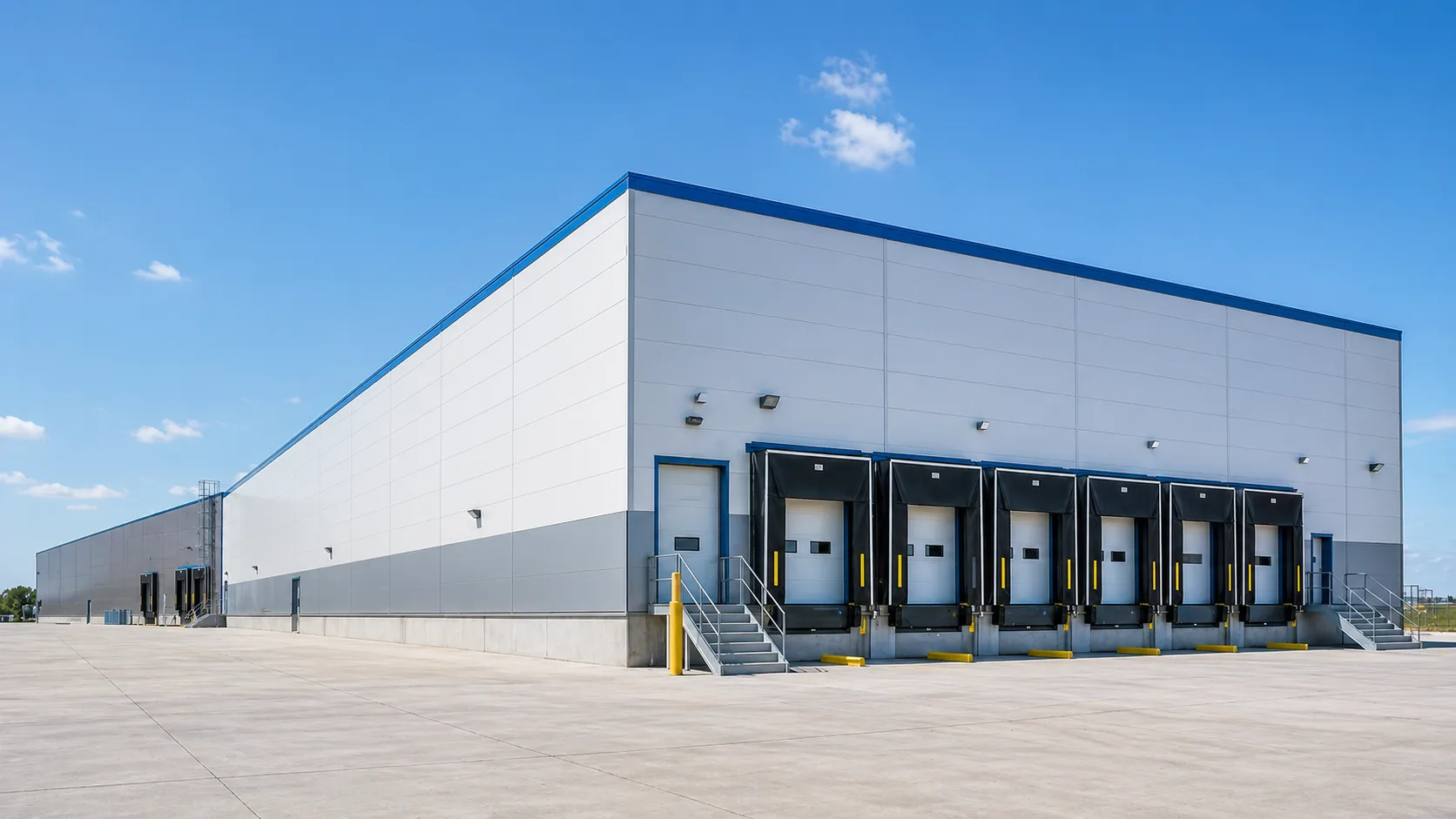
Dock seals are tighter but require precise trailer alignment. Dock shelters tolerate varied trailer geometry but allow more infiltration. Vertical-storing levelers with dock seals provide premium infiltration performance.
Racking and storage systems
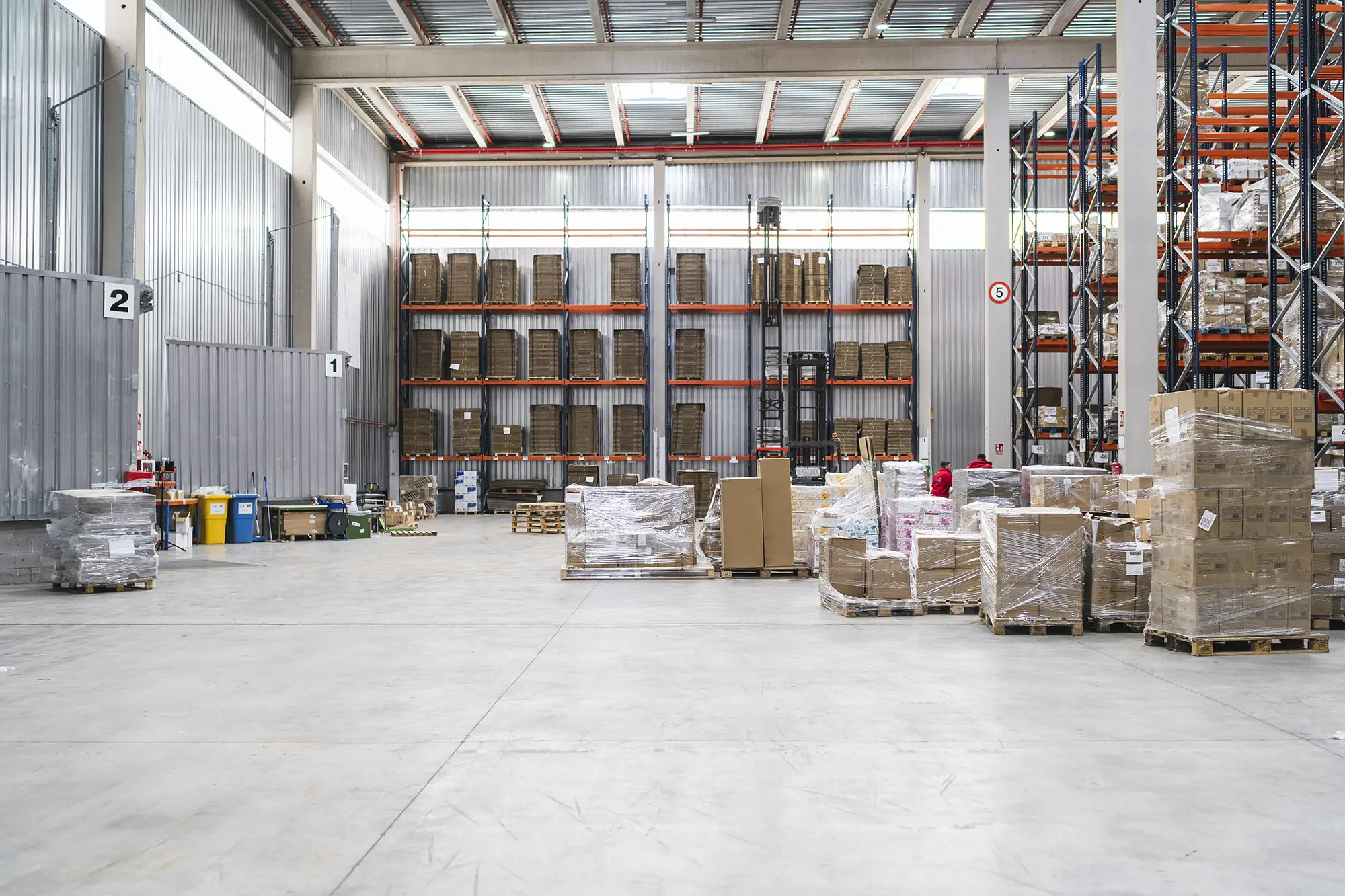
Selective pallet racking, push-back, drive-in, pallet flow, AS/RS, pallet shuttle, and mobile racking each change clear height, column spacing, floor flatness, electrical service, and refrigeration airflow requirements. Racking is a pre-construction decision, not a late procurement item.